
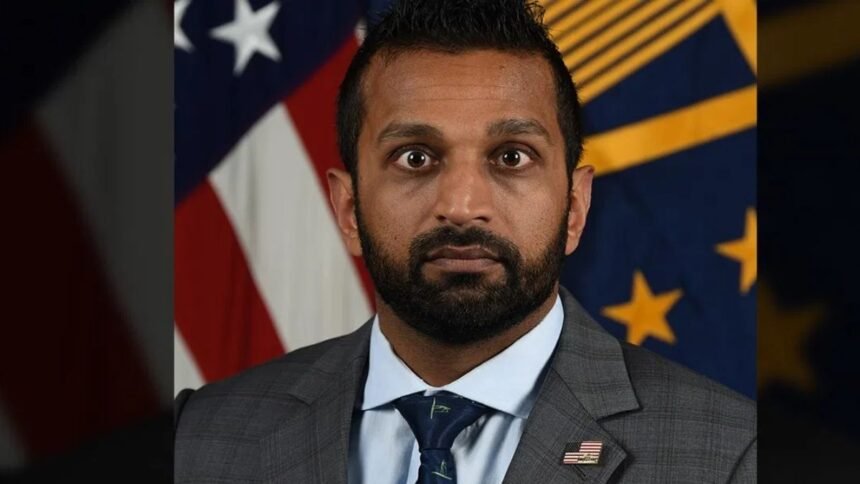
Kash Patel spent months telling audiences he would deliver “total transparency” about Jeffrey Epstein. The promise was simple: let the public see what the government knows, and let the chips fall where they may. But the newest document dump tied to the Epstein Files Transparency Act is raising a different question: when the files finally arrived, did the redaction process protect victims first, or protect the powerful first?
On January 30, 2026, the U.S. Department of Justice said it published more than 3 million additional pages responsive to the Epstein Files Transparency Act, along with more than 2,000 videos and 180,000 images. The DOJ also claimed that “notable individuals and politicians were not redacted in the release of any files,” and said redactions were meant to protect victims and families.
That statement matters because what readers are reacting to now is not just what is in the files. It is what appears to be missing, blurred, blacked out, or inconsistently handled.

The Email That Lit the Fuse
A widely shared March 2025 internal email, circulated online by political accounts, describes FBI personnel asking for “clear and specific guidance” on how to redact photos involving “victims, unknown-unidentified females and males, former U.S. Presidents, Secretary of State, and other celebrities.” The phrasing is the kind that lands like a match near dry grass, because it suggests the review process was not only about shielding victims’ identities. It was also about deciding how to treat images tied to famous or politically sensitive people.
A March 2025 internal email from the Epstein files shows Kash Patel’s FBI discussing “clear and specific guidance” to redact pictures involving “victims, unknown-unidentified females and males, former U.S. Presidents, Secretary of State, and other celebrities.” pic.twitter.com/80lQ6vXHYx
— Republicans against Trump (@RpsAgainstTrump) February 7, 2026This is the core tension. Most Americans agree victims deserve strong privacy protections. But if the government is also redacting material mainly because it could embarrass or implicate prominent people, then “privacy” starts to look like a moving target.
DOJ Claim vs Public Doubt
In its official announcement, the DOJ insisted its instructions were to keep redactions limited to victim protection and that politicians were not redacted. It also warned that the production may include fake or falsely submitted materials because it published what was submitted to the FBI as part of what was “responsive to the Act.”
At the same time, the DOJ’s Epstein disclosures page includes a warning that, due to volume, some sensitive information could be posted inadvertently and asks the public to report issues so the department can correct them.
That combination can leave readers feeling whiplash. On one hand, the DOJ presents the release as careful and rule-bound. On the other, it admits mistakes are possible at scale. In that space, trust becomes fragile.
What the New Release Shows
Mainstream coverage of the latest release describes more detail about Epstein’s contacts and the government’s earlier awareness of his abuse. Reporting also notes criticism that redactions and disclosures can make victims easier to identify than the people who enabled Epstein’s access and protection.
This is not a minor complaint. If victims are exposed while powerful associates remain obscured, the “transparency” looks upside down.
And the overall record still supports what the public already knows: Epstein built a world where influence acted like insulation. He didn’t just have money. He had proximity to status.
The Patel Problem: Confidence Without Proof
Patel’s defenders argue there is no credible proof tying certain political figures to crimes. Critics argue something else: that Patel’s public certainty sometimes reads like a bet that the absence of leaked evidence equals the absence of wrongdoing.
This matters because the Epstein story is not only about what happened. It is also about how institutions respond when the people who might be embarrassed are also the people with power.
If internal staff are asking how to redact photos that include “former U.S. Presidents” and “other celebrities,” the public hears a familiar message: the system has two settings, one for ordinary people and one for the protected class.
What We Can Say Carefully
There is a responsible way to cover this without turning it into guesses.
The DOJ confirms it released millions of pages and huge amounts of media.
The DOJ also acknowledges the risk of accidental disclosure and asks the public to report sensitive items.
Reporting on the newly released tranche describes broad controversy over redaction practices and points to internal communications showing confusion and urgency about how to handle sensitive images.
That is already enough to support a tough but fair conclusion: the redaction process itself is now part of the Epstein story. And it may be the part that decides whether the public believes the next promise of “full transparency.”
The Real Test Ahead
Major outlets continue to report new findings as they review the release, and the DOJ has described controlled access for lawmakers to see unredacted materials. If lawmakers can compare unredacted files with public releases, they can answer the question that matters most: were redactions applied mainly to protect victims, or used to protect reputations?
If the answer is “both,” Americans deserve to know where the line was drawn, who drew it, and why.







_(cropped).jpg)