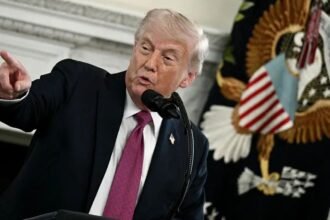

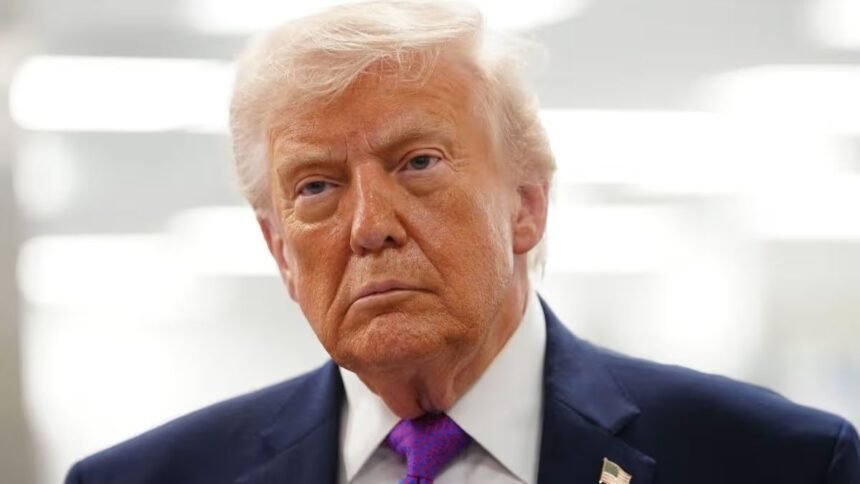
President Trump is now facing a wave of national outrage after his administration began funneling an eye-popping $200 billion toward the ongoing war in Iran, even as ordinary Americans struggle to afford basic necessities like bread, gasoline, and groceries at a time when oil prices have surged past $100 per barrel.
The massive price tag first surfaced Thursday when The Washington Post reported that the Pentagon is seeking more than $200 billion in additional war funding. The figure is not yet final, but it is expected to become the Trump administration’s formal request to Congress through what Washington insiders call a “supplemental funding bill.”
This would not replace the Pentagon’s existing budget. It would come on top of the military’s already staggering $1 trillion annual budget.
Defense Secretary Pete Hegseth stepped in front of reporters Thursday to defend the number. His answer was blunt and showed little concern for the controversy swirling around it.
“It takes money to kill bad guys,” Hegseth told reporters.
He also tried to frame the spending as a matter of national readiness, adding, “This kind of funding bill is going to ensure that we’re properly funded going forward.” President Trump later appeared to endorse the figure as well.
The $200 billion request did not land quietly. It immediately drew sharp criticism from lawmakers on both sides of the aisle, and the backlash was swift.
Even Sen. Roger Marshall, a Kansas Republican and Trump ally, appeared caught off guard. Speaking Thursday morning on Fox Business, Marshall said the figure “sounds like a high number to me.” That kind of skepticism from within the GOP itself signals just how politically risky this request has become.

To put the number in perspective, $200 billion is more than everything the United States has spent supporting Ukraine since that war began in 2022. A recent Council on Foreign Relations report found that total US spending on Ukraine reached $188 billion over that period. The Iran war is already threatening to blow past that figure in a matter of months.
Earlier estimates had placed the Pentagon’s expected request at closer to $100 billion. The jump to $200 billion suggests that military planners are no longer expecting a short or contained conflict. Officials previously told lawmakers that in just the first week of the war, costs had already reached $11.3 billion, which works out to nearly $2 billion per day.
The war’s financial weight is also being felt beyond the defense budget. Iran has effectively blocked shipping traffic through the Strait of Hormuz, one of the world’s most critical waterways for oil exports. That blockade, combined with new Iranian attacks on oil infrastructure this week, has kept crude oil prices above $100 per barrel and driven gasoline prices sharply higher across the United States.
Economists warn that the ripple effects are already hitting everyday Americans hard. Higher fuel costs push up the price of food, goods, and nearly everything transported by truck or plane. At a moment when many families are already stretched thin, a prolonged and expensive war in the Middle East threatens to make that situation significantly worse.
Back in Washington, the path to actually securing the $200 billion is far from clear. House Speaker Mike Johnson, normally a reliable Trump ally, offered only cautious words when asked about the figure Thursday. Speaking briefly to CNN, Johnson said he would look at the details when they are offered and would only say, “I support what’s needed to ensure that the American people remain safe.” That is hardly a ringing endorsement.
Democrats have been even more direct. Sen. Ruben Gallego, an Arizona Democrat, posted his party’s collective position in plain terms: “The answer is a simple no.” Democrats had already pledged to block the funding request before the $200 billion figure was even made public.
Republicans have floated the idea of using a parliamentary process called budget reconciliation to push the funding through with only a simple Senate majority, bypassing the need for Democratic votes. But that strategy is legally complicated, politically uncertain, and would require every single Republican senator to fall in line.
Another possible route is through the annual National Defense Authorization Act, which sets overall Pentagon spending and is considered a must-pass bill each year. The problem is that this bill also requires Democratic support to move forward, putting Republicans in the same difficult position.
Hegseth offered no indication that the administration plans to change course or scale back the military campaign. When asked about the timeline for the conflict Thursday, he said bluntly, “We will finish this.” Whether Congress agrees to write the check for that promise remains a very different question.
Trump, for his part, tried to cast the request in broader terms when pressed by reporters. “We are asking for a lot of reasons,” he said. He suggested the funding goes beyond the current conflict and is also about rebuilding US military strength more broadly. Calling it a small investment in national security, Trump added, “This is a small price to pay to make sure that we stay tippy top.”
For millions of Americans watching their grocery bills climb and their paychecks stretch thinner, $200 billion does not feel like a small price. It feels like a choice. And right now, that choice is being made for them.