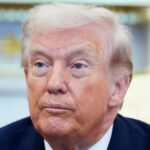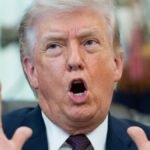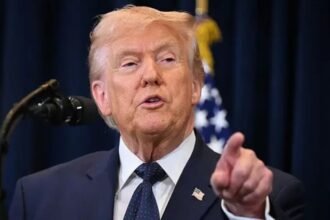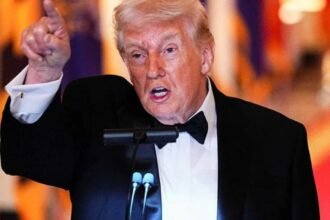

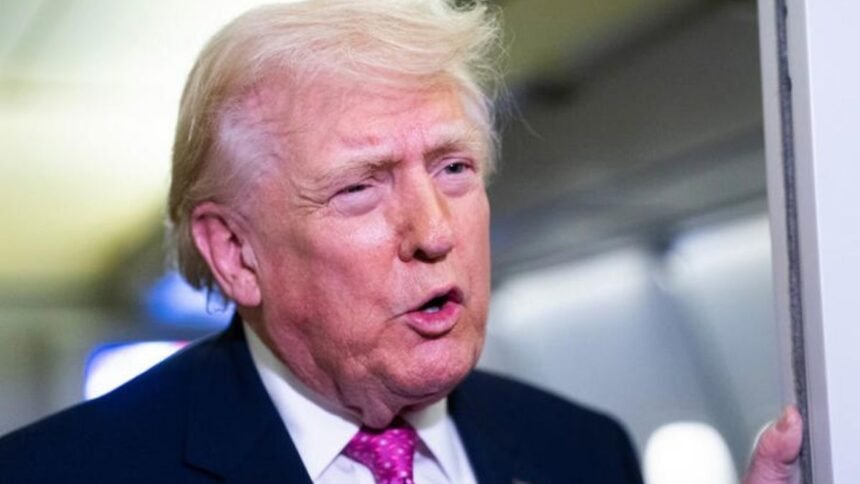
It was supposed to be a routine moment at the White House. A reporter asked a simple, fair question about rising fuel prices. What happened next left the entire press room stunned and speechless, as President Donald Trump completely lost his mind and exploded into a heated, rambling tirade that nobody in that briefing room saw coming.
Trump lashed out at the reporter with a fury that felt deeply personal. Instead of answering the question about skyrocketing gas prices, he launched into a long, winding speech about Iran, nuclear weapons, and why Americans should feel grateful. The press room sat in near silence as the President’s voice grew louder and his words grew stranger.
The question itself was reasonable. Gas prices in the United States have now hit $4 per gallon, the highest level since Russia invaded Ukraine back in 2022. Everyday Americans are feeling the pain at the pump, and they want answers.
Trump was at the White House on Tuesday signing an executive order focused on cracking down on mail-in voting when reporters were given a chance to ask questions. One reporter asked the President directly what he planned to do about the crushing cost of fuel. That question triggered one of the most bizarre responses seen from a sitting U.S. president in recent memory.
Rather than addressing the cost-of-living crisis head-on, Trump argued that Americans should feel “safer” because of his military strikes against Iran. He claimed the strikes were necessary, even though they are the very reason fuel prices have skyrocketed to begin with. The logic left many in the room visibly confused.
Here is exactly what Trump said to the reporter:
“All I have to do is leave Iran, and we’ll be doing that very soon. And [fuel prices will] come tumbling down. And stock prices were up today almost to a record because they know two things: Number one, we have a safe country. We had to take a little detour because we had a madman named [Iran’s former Supreme Leader Ali] Khamenei, who, sadly, is no longer with us.”
He continued, doubling down on his defense of the war:
“We’ve knocked out one regime, then we knocked out the second regime. Now we have a group of people that’s very different. They’re much more reasonable, much less radicalized. We’re dealing with people that are much more rational. It’s amazing what we’ve done. We had to make a little detour.”
Then came the moment that left the press room in complete silence. Trump turned directly to the reporter and delivered a chilling, personal warning:
“It would have been used before this, before today. And you may not be standing there asking that question, okay?”
The implication was clear and deeply unsettling. Trump was telling the reporter that without his military actions against Iran, they would not even be alive to ask that question. It was a statement that drew immediate attention online and across major U.S. news networks.
Despite the dramatic speech, Trump offered zero concrete plans to help Americans struggling with high energy costs. He did not mention any relief measures, price controls, or emergency support for working families. He simply said the war would be over in a matter of weeks and prices would come down.
Across the Atlantic, the situation is equally alarming. Iran’s blockade of the Strait of Hormuz, a critical shipping route through which roughly one-fifth of the world’s oil passes, has sent fuel prices surging across Europe. The UK government is now preparing emergency plans to manage a potential fuel shortage.
Downing Street has confirmed that petrol stations are under pressure, with images showing numerous garages running out of supply as panicked drivers begin stockpiling fuel. Prime Minister Keir Starmer has been meeting with industry leaders to assess just how serious the situation could become.
UK officials have confirmed they are preparing for all eventualities. Emergency vehicles such as ambulances and police cars will be given priority access to fuel supplies. Speed limits may also be reduced to cut overall fuel consumption, a step previously recommended by the International Energy Agency.
Experts say relatively simple actions could help ease the pressure. Working from home, cutting non-essential travel, increasing public transport use, and reducing domestic flights are all being considered as practical short-term solutions. But for millions of Americans and Britons filling up their tanks today, simple solutions feel anything but simple.
The real story here is not just about one explosive moment at a White House briefing. It is about a president who completely lost his composure when asked one of the most pressing questions facing the American people today. And the press room, stunned and speechless, had no choice but to sit and watch.