

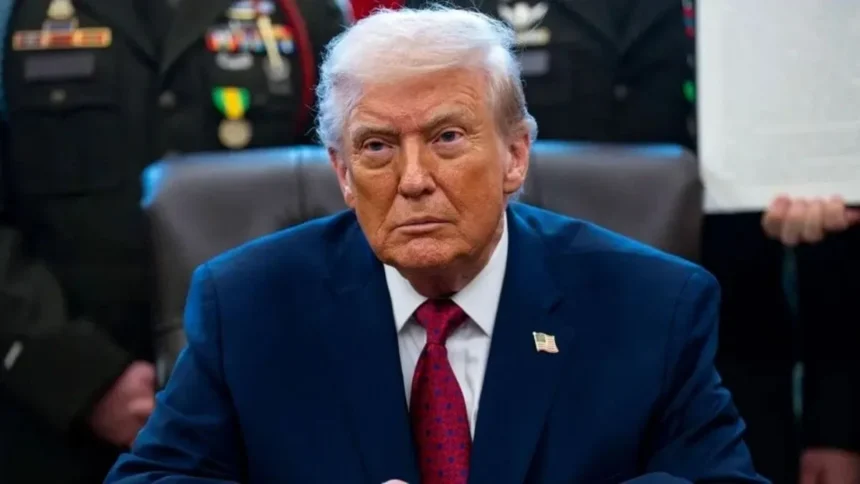
The Trump administration just ran into two legal roadblocks in California, losing separate fights that touch the political nerve centers of modern American elections: redistricting and voter data privacy.
One case involved a new congressional map process tied to Proposition 50, and the other involved a federal judge rejecting a Justice Department request for highly sensitive voter records.
Together, the rulings underline a basic reality of election law in 2026: courts may tolerate hardball politics, but they are far less forgiving when the government pushes into constitutionally risky territory or bumps into privacy guardrails.

Case One: Proposition 50 Survives a Challenge
In the first ruling, a three-judge panel in the U.S. Central District Court of California upheld Proposition 50, a voter-approved measure linked to redrawing California’s congressional maps for the 2026 midterm elections. The decision was 2–1. Judge Josephine Stanton wrote the majority opinion, and Judge Kenneth Lee dissented.
The panel’s language was strikingly blunt about what the evidence showed. The court concluded that Proposition 50 was “exactly what it was billed as: a political gerrymander designed to flip five Republican-held seats to the Democrats.” That sentence matters, because it signals the court viewed the map’s intent as political rather than racial, a key legal dividing line. Political gerrymandering is deeply controversial, but it is often harder to defeat in federal court than racial gerrymandering claims, depending on how the case is framed and which constitutional provisions are invoked.
The Trump administration and California Republicans sued Newsom and California Secretary of State Shirley Weber, arguing the new maps favored Hispanic voters over other groups. They claimed the lines were drawn predominantly on race, alleging violations of the 14th and 15th Amendments. The GOP also asked for a preliminary injunction to stop the maps from being used in 2026. The court did not grant that request.
California Democrats countered with a different story: yes, the maps were drawn with an eye on outcomes, but the driving force was politics, not race. They argued the goal was to protect vulnerable Democratic incumbents and candidates. In plain English, the defense was basically: this is partisan mapmaking, not illegal racial sorting. And, at least for now, the panel sided with that view.

Case Two: DOJ Blocked From Sensitive Voter Data
The second loss for the Trump administration came in a separate federal case, where U.S. District Judge David O. Carter rejected the Justice Department’s request for sensitive voter information in California.
Carter wrote that the DOJ’s request violated federal privacy laws, and he added that “leave to amend would be futile,” meaning the court saw no realistic way to fix the request and make it lawful through a revised complaint. That is a strong form of rejection, not a gentle “try again.”
According to the court document quoted in the report, the DOJ sought a sweeping set of personally identifying voter information. The requested data included Social Security numbers linked to names, addresses, phone numbers, registration methods, voting participation history, party registration, driver’s license numbers, ballot language preference, alternate ID numbers for people without a driver’s license, email addresses, and current registration status. Even reading the list feels like watching the government reach into a filing cabinet that most Americans assume is locked for a reason.
This ruling lands in the middle of a national fight over election integrity, data security, and public trust. States want clean voter rolls and secure elections. Voters want privacy and safety, especially in an era of identity theft, targeted harassment, and data breaches. Courts, meanwhile, have to decide where legitimate oversight ends and overreach begins. Carter’s decision signals that, at least on this record, the DOJ crossed the line.
The Political Response Machine Kicks In
Republican officials said they plan to appeal the rulings. Attorney General Pam Bondi posted on X that the administration disagreed with the 2–1 redistricting decision and argued California “impermissibly drew its new congressional map based on race,” calling it unconstitutional and saying the DOJ was reviewing options.

On the other side, Newsom celebrated the decision and framed the lawsuit as an attempt to silence voters. He also pointed to broader national tit-for-tat over maps, saying voters backed Proposition 50 as a response to “Trump’s rigging in Texas,” and said the court’s finding matched that political reality.
California Attorney General Rob Bonta emphasized that challenges to the measure have repeatedly failed so far, calling the outcome a victory for the will of voters. His statement was less about celebrating Democrats and more about validating process: Californians voted, the state acted, and the courts declined to stop it.

What These Losses Tell Us
Put both rulings together and a theme appears. Courts may recognize that election politics is often ruthless. But they still demand clean legal categories and real limits. If a map is attacked as racist, judges want proof that race, not raw politics, did the work. If the federal government asks for voter data, judges want a tight justification that respects privacy law instead of a wide net that scoops up everyone’s personal identifiers.
The appeals will matter. So will what comes next in Congress and the states, especially as both parties treat redistricting as a zero-sum fight for the House. But for now, these two decisions show California’s legal defenses holding, and the Trump administration leaving court without the wins it wanted.




.jpg)
.jpg)