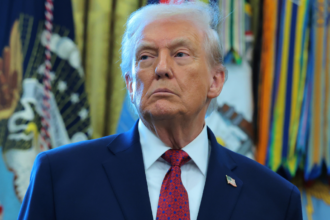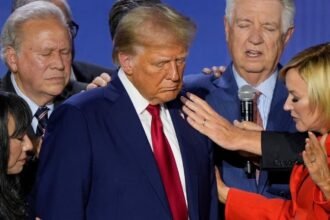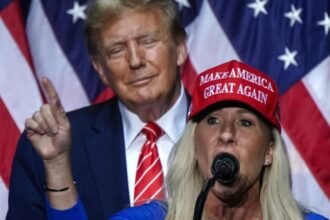

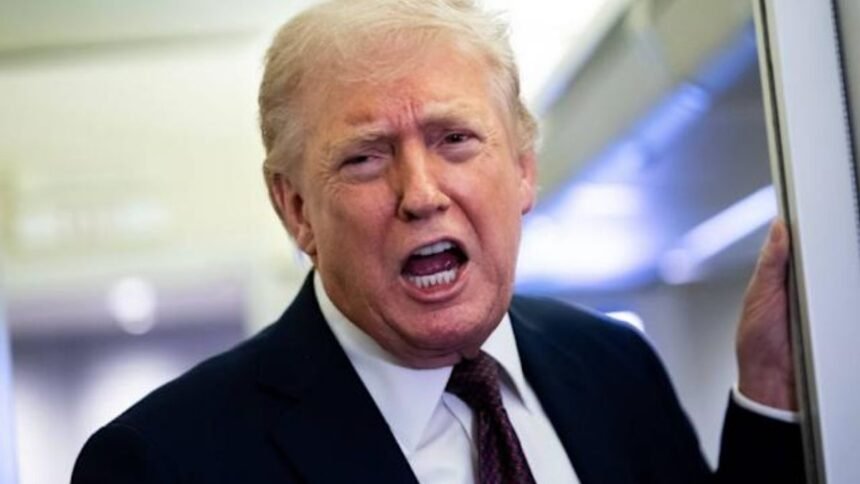
President Donald Trump, 79, is facing a growing wave of anger — and this time, it is not coming from the left. His own conservative base is turning on him, publicly branding him completely hopeless after his latest update on the Strait of Hormuz crisis. For a president who has spent years telling his supporters that he alone can fix things, this kind of backlash from within his own camp is both striking and deeply telling.
The frustration boiled over after Fox News took to its social media accounts on May 3 to report that a large cargo ship had been “attacked by multiple small boats” in the Strait of Hormuz. The strait is the single most important oil export route in the entire world, responsible for moving roughly 20 percent of all global oil supply every single day. Any disruption there does not just affect foreign governments — it hits American families directly at the gas pump, and they know it.
Trump responded to the Fox News report quickly with a public announcement of his own. He declared that the United States would step in to “help free neutral foreign ships locked up in the Strait of Hormuz.” He branded the effort Project Freedom and promised it would launch the very next day, framing it as a bold display of American power and leadership.
The announcement, however, did not land the way the White House likely hoped. Conservatives across social media were fast to point out a deeply uncomfortable truth hiding inside Trump’s own words. The ships were not trapped in the Strait of Hormuz before the current U.S.-Iran military conflict began to escalate under Trump’s watch.
That single detail became the centerpiece of the backlash. Critics, including many self-identified Trump voters and Fox News followers, argued loudly that Trump had created the very crisis he was now claiming to solve. The optics of announcing a rescue mission for a problem that many believe his own foreign policy decisions helped create proved to be too much for even some of his most loyal supporters to stomach.
One Fox News fan laid it out with no filter at all. “Trump is hopeless. No ships were locked in the Strait of Hormuz before the war. The ships currently trapped there are in this predicament because of Trump’s silly war.”
A second person delivered an equally sharp take that quickly spread across platforms. “Create a problem. Then say you’re fixing a problem, but acting as if it wasn’t yours. Can’t wait for this clown show to be over.”
A third conservative commenter brought the conversation back to something that millions of Americans feel every single week. “It’s a Sunday. And Trump always comes up with something to try to quell the stock markets. In the meantime, we continue to pay out of our a– for gas.”
The financial dimension of this crisis is real and it is personal for a huge number of Americans. Gas prices have been climbing steadily as Iran’s blockade of the Strait of Hormuz squeezes the global oil supply tighter. When everyday working Americans are feeling the pain at the pump, patience for political announcements runs very thin, very fast.
Not every voice was critical of the president. At least one Trump supporter pushed back firmly and defended Project Freedom as a genuine act of strength. “Finally. American leadership is back. Neutral ships stuck in Hormuz while the world watches? Not on Trump’s watch. Project Freedom is what winning looks like.”
Supporters like that one are becoming harder to find in the comment sections, though. The broader reaction among conservatives reflected a base that is growing tired, frustrated, and increasingly willing to say so out loud in public spaces where Trump’s team can clearly see it. Being branded a failure by the people who voted for you is a very different kind of political wound than being criticized by your opponents.
The situation on the ground took an even more alarming turn on May 4. The IRGC-affiliated Fars News Agency reported that two missiles struck a U.S. vessel as it attempted to pass through the strait, forcing it to retreat. The report spread instantly across news platforms and social media, raising serious fears about a direct and potentially catastrophic military confrontation in the world’s most strategically important shipping lane.
U.S. Central Command moved swiftly to counter that report with an official denial. In a statement posted directly to X, the command said, “No U.S. Navy ships have been struck. U.S. forces are supporting Project Freedom and enforcing the naval blockade on Iranian ports.” The denial brought some relief but also left many observers uncertain about what was actually happening in the region, given the contradicting accounts.
Adding to the confusion, the US-led Joint Maritime Information Center issued new guidance to commercial ships on the same day. Vessels were advised to cross the strait through Oman’s territorial waters, where an “enhanced security area” had been set up to lower the risk of attack. The move signaled that even U.S. officials were not fully confident about the safety of direct passage through the strait.
Iran’s military leadership then made their position unmistakably clear. Major General Pilot Ali Abdollahi told state broadcaster IRIB in a direct and chilling warning, “We warn that any foreign military force — especially the aggressive US military — that intends to approach or enter the Strait of Hormuz will be targeted.” That statement left very little room for interpretation about where Iran stands right now.
The Iran-U.S. standoff over the Strait of Hormuz is not cooling down — it is heating up with every passing day. With global energy markets watching nervously and American families absorbing the cost of rising oil prices in real time, Trump’s ability to turn Project Freedom into a genuine, lasting victory is now under the most intense scrutiny of his second term.
For a president who built his entire political brand on being a winner and the world’s greatest dealmaker, being called completely hopeless by his own base is a failure that no carefully worded press release can erase. Whether Project Freedom eventually delivers real results or simply fades into a long list of bold announcements with no follow-through is now the question that will define this chapter of his presidency.