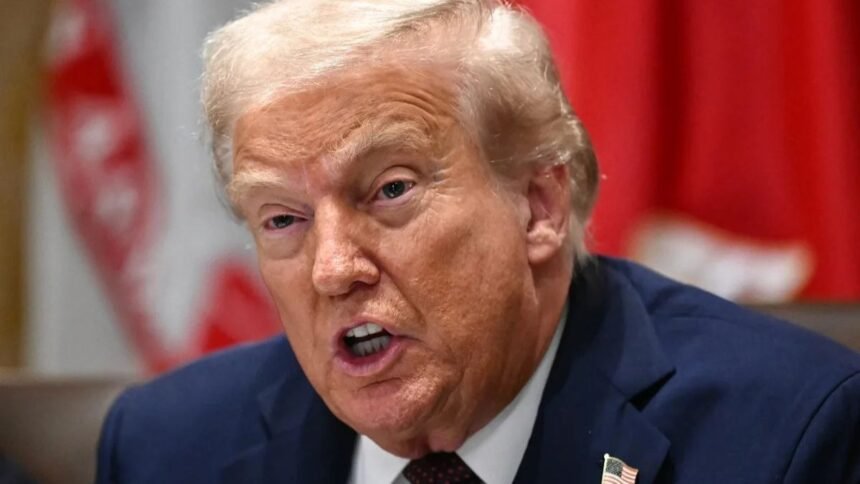
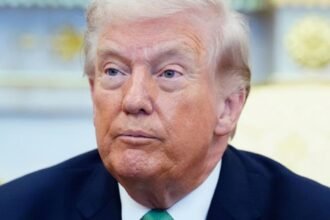
President Donald Trump warned House Republicans that losing control of Congress in the 2026 midterm elections could expose him to another impeachment effort, using the prospect as a political jolt to unify lawmakers behind his agenda.Trump delivered the message during a retreat for House Republicans at the John F. Kennedy Center for the Performing Arts in Washington, where he urged the conference to treat November’s contests as a referendum not only on policy but also on his ability to govern without constant investigations. “You gotta win the midterms… they’ll find a reason to impeach me,” Trump told lawmakers, according to accounts of the remarks.The warning comes as both parties shape their 2026 strategies around control of the House and Senate—an outcome that could determine the direction of federal oversight, the scope of congressional investigations, and the durability of Trump’s second-term legislative push.Trump framed the stakes bluntly: without a Republican majority, Democrats could revive impeachment as a tool of accountability and political pressure. The message also served as a reminder of his history with Congress. Trump is the only president to have been impeached twice, and he has repeatedly described those proceedings as baseless.Trump’s first impeachment, in 2019, centered on allegations tied to Ukraine. The second, in 2021, followed the Jan. 6 attack on the U.S. Capitol. In both cases, the Senate did not reach the two-thirds threshold required for conviction and removal.
Why Trump is making the argument now
The political math is straightforward. A House majority controls committee chairmanships, subpoenas, and the ability to advance impeachment articles. Trump’s pitch to lawmakers was that holding the chamber is a form of institutional insurance—protecting his presidency from a Democratic-led escalation that could dominate headlines, drain political capital, and slow major policy fights on taxes, health care, and immigration.It’s also a familiar midterm pattern. Sitting presidents have often struggled in midterm elections, and Trump himself referenced the idea that winning the White House can lead to losses two years later—an observation frequently discussed in campaign strategy circles because it affects investor expectations, regulatory outlooks, and the broader economic narrative.At the retreat, Trump encouraged Republicans to keep their focus on selling the party’s platform—touching on issues such as gender policy, health care, and election integrity—while also acknowledging voters’ frustration with the cost of living.
What leaders are saying
House Speaker
Mike Johnson has voiced similar concerns, arguing that a Democratic takeover would likely trigger impeachment attempts and a new round of political brinkmanship. In a separate public warning reported by political outlets, Johnson said a shift in House control could create “absolute chaos.”Democrats, meanwhile, have offered a more measured view—suggesting impeachment is not automatically the most effective remedy even when they oppose Trump’s actions. Rep.
Jamie Raskin has noted that Trump has already survived two impeachment trials, underscoring the difficulty of removal without a supermajority in the Senate.In recent days, political chatter has also been fueled by the public release of documents connected to Jeffrey Epstein, prompting renewed scrutiny and calls from some Democrats for further review of past associations—though no formal impeachment action has been launched on that basis.
Why it matters
Even without removal, impeachment proceedings can reshape Washington in ways that affect everyday Americans and the economy. A serious impeachment push can slow or derail legislation, freeze bipartisan negotiations, and elevate uncertainty around federal policy, regulatory enforcement, and major budget deadlines—dynamics that often ripple into business planning and consumer confidence.For Republicans, Trump’s warning is also a turnout argument: keep the House and Senate in GOP hands to protect the presidency and maintain momentum on priorities like health care policy and broader governance fights over the limits of executive power. For Democrats, the question is whether aggressive oversight—or impeachment—would be politically effective, given the Senate’s high bar for conviction and the risk of energizing Trump’s base.Trump’s argument, delivered behind closed doors, distilled a larger truth about midterms: they can decide whether the next two years are defined by legislation—or by investigations.