
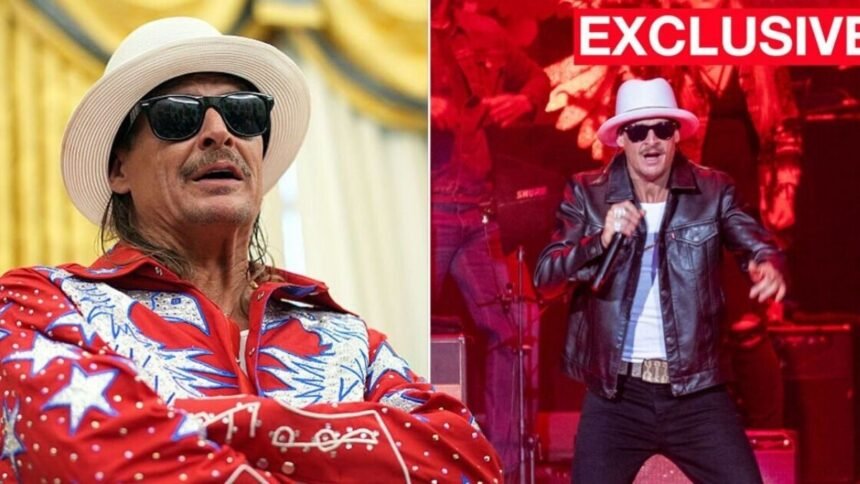
Kid Rock’s Rock the Country music festival is falling apart in real time. One by one, artists have been dropping out of their planned performances after critics branded the event a MAGA fest, and now the fallout has reached a point where entire show dates are being canceled. What started as a high-profile touring festival is quickly turning into one of the most public collapses in recent country music history.
The trouble began when Kid Rock’s strong support for Donald Trump and his visible association with Robert F. Kennedy Jr. drew fierce political criticism. The festival was labeled a MAGA event by detractors, and that label stuck. It did not take long for artists to start distancing themselves from the entire production.
Ludacris and Morgan Wade were among the first to pull out. Then came Shinedown and Jelly Roll, two of the festival’s most recognizable names. Each departure punched another hole in a lineup that was already struggling to hold itself together under the weight of the political controversy surrounding it.
The cascade of cancellations created a problem that could not be papered over. With significant gaps in the lineup and mounting pressure, organizers were forced to cancel a planned stop in Anderson, South Carolina. The show had been scheduled for July 25.
Ticketholders were given two options. They could attend a different location and receive a $50 merchandise credit, or they could request a full refund. Neither option is the one fans had been hoping for when they originally bought their tickets.
The financial consequences of a canceled date go far deeper than most people realize. Music industry expert Steve Nixon, a world-touring pianist, explained to The Express US exactly why a single cancellation can trigger a chain reaction that threatens an entire tour’s survival.
“When a show like Anderson gets scrapped, the financial hit is instant and vicious,” Nixon said.

Nixon went on to explain the mechanics behind why canceled shows bleed money so quickly. Touring operations require months of advance payments for trucks, equipment rigs, and crews. Those contracts do not simply disappear when a show is called off.
“You pay those contracts even if the stage was always dark, because those workers blocked out their calendars,” Nixon explained. “This is why a no-show date is a complete drain of capital with no ticket or beer sales to balance the books.”
He did not stop there. Nixon also pushed back against the popular image of a music star simply sitting back and watching money roll in. The reality of touring economics, he said, is far less glamorous than the public imagines. Pre-payments, logistics, and crew contracts eat into revenue long before a single fan walks through the gate.
His warning for Kid Rock was direct and unsparing.
“A stagnant tour is as good as a bankrupt tour,” Nixon said.
The human cost of the Anderson cancellation extended well beyond the festival itself. Rusty Burns, the Anderson County Administrator, spoke openly about what the loss means for the local community. The festival had been a significant economic engine for the area in previous years.
“Anderson County has been proud to host Rock the Country for the past two years,” Burns said. “Of course, we are disappointed that Rock the Country will not return to Anderson this year.”
The numbers behind that disappointment are substantial. In past years, the festival drew tens of thousands of attendees to Anderson County and generated a multi-million-dollar economic boost for local businesses, hotels, and restaurants. That money will not be coming this summer.
What makes this story particularly striking is the speed at which it unraveled. The Rock the Country festival did not collapse because of poor planning or bad weather. It collapsed because of politics. Artists looked at the MAGA branding, weighed the reputational risk, and walked away. Each departure made the next one easier to justify.
Kid Rock built his brand on being the loudest, most defiant voice in the room. He has never shied away from controversy and has worn his political loyalties openly for years. But there is a difference between controversy that generates buzz and controversy that drives away the people you need to put on a show.
Right now, Rock the Country is finding out exactly where that line is. And by the looks of things, the festival crossed it a long time ago.