
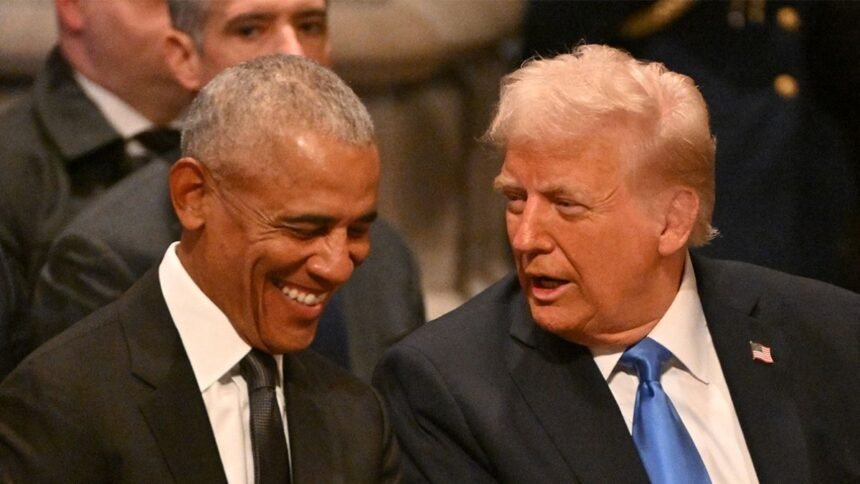
On Wednesday, the Supreme Court delivered a ruling that absolutely shook the political world. In a 6-3 decision, the justices ruled that the Fifteenth Amendment’s prohibition on intentional racial discrimination forbids race-based redistricting, effectively striking down Louisiana’s racially drawn congressional map. The ruling landed like a bombshell, and former President Barack Obama was among the first major voices to publicly push back against it.
Obama took to X with a lengthy statement calling the decision a gutting of a key pillar of the Voting Rights Act. He argued that it now gave state legislatures cover to gerrymander districts and weaken minority voting power, so long as they dressed the process up as “partisanship” rather than admitting explicit racial motivation.
His statement closed with a call for Americans to mobilize and vote in record numbers at every level of government, not just in high-profile races.
Today’s Supreme Court decision effectively guts a key pillar of the Voting Rights Act, freeing state legislatures to gerrymander legislative districts to systematically dilute and weaken the voting power of racial minorities – so long as they do it under the guise of…
— Barack Obama (@BarackObama) April 29, 2026The reaction on social media was swift, fierce, and deeply personal. Thousands of users turned the former president’s own words against him, pointing out the contradiction of a man who once preached unity and character-over-color now defending maps drawn entirely on the basis of race. The pushback came from all sides and did not slow down.
Writer and former nuclear scientist Matt Van Swol was among the first to go viral with his response. His post called out the core contradiction in Obama’s position with language that was blunt, direct, and clearly struck a chord with a massive online audience.
You have absolutely lost your mind.
YOU were the guy who was supposed to get us PAST sorting people by race.
You said judge people by character not color.
Now you're calling it "voter suppression" when the Court strikes down a district drawn ENTIRELY BY SKIN COLOR??!!
The… pic.twitter.com/2NQ5Xq8Xmh
— Matt Van Swol (@mattvanswol) April 29, 2026Van Swol’s message zeroed in on a point that resonated widely. Obama had spent much of his public life presenting himself as a bridge-builder who wanted America to judge its citizens by their character, not their skin color. His decision to now defend districts drawn explicitly on racial lines felt, to many, like a direct betrayal of that message.
Legal commentator and constitutional scholar Ilya Shapiro also jumped in to correct what he called a flat-out mischaracterization of the ruling. Shapiro argued that the Voting Rights Act never required states to create majority-minority districts in the first place, and that states are constitutionally barred from using race as the primary driver of any redistricting plan.
As with tour characterization of Citizens United, not true! Today’s voting-rights blockbuster was the right call and a victory for the colorblind Constitution. The bottom line is that the Voting Rights Act doesn’t require majority-minority districts and states can’t use race to…
— Ilya Shapiro (@ishapiro) April 29, 2026Fox News host Jimmy Failla took a sharper angle, going directly after Obama’s legacy. His response hit hard because it framed the criticism not around legal arguments, but around the weight of what it means to be America’s first Black president and then champion policies that many feel pull the country backwards on race.
I can’t imagine being a nations first black president and wanting to take them all the way backwards on race but if you like your garbage legacy you can KEEP your garbage legacy.
— Jimmy Failla (@jimmyfailla) April 29, 2026It was pointed out that the districts as apportioned in Illinois, Obama’s home state, which is run by Democrats, are crazy:
lol. This is your home state pic.twitter.com/95DsjmFZox
— Megan Basham (@megbasham) April 29, 2026Critics also wasted no time pointing out the hypocrisy angle through geography. Commentator Megan Basham shared a map of Illinois, Obama’s own home state, which is fully controlled by Democrats. The congressional districts there are just as unusually shaped and oddly configured as the ones Obama was now criticizing in Louisiana.
These are the 2 illegal racially gerrymandered districts that the Supreme Court overturned. Any fair map of Louisiana will look nothing like this 👇 pic.twitter.com/UOzzq2Hus4
— Izengabe (@Izengabe_) April 29, 2026The ruling, officially known as Louisiana v. Callais, was authored by Justice Samuel Alito and joined by five other justices. Alito made it crystal clear that when a state draws its congressional maps using race as the central factor, it is violating the Constitution, not protecting it. There is no compelling interest powerful enough to justify that approach.
“Section 2 of the Voting Rights Act of 1965 was designed to enforce the Constitution, not collide with it. Unfortunately, lower courts have sometimes applied this Court’s precedents in a way that forces States to engage in the very race-based discrimination that the Constitution forbids,” Alito wrote.
Alito went further, reinforcing that the constitutional rule against racial sorting in government decision-making applies almost universally across every area of law. Redistricting, he made clear, is not an exception just because a political party finds the outcome convenient.
“Allowing race to play any part in government decision making represents a departure from the constitutional rule that applies in almost every other context,” he continued.
Obama’s deliberate use of the phrase “guise of partisanship” was widely read by legal commentators as an intentional misframing of the ruling. Alito had addressed this directly in his opinion, explaining that partisan gerrymandering, while deeply unpopular, is not something federal courts have the legal power to block. That is settled law since the Court’s 2019 decision in Rucho v. Common Cause. When a state draws maps for political reasons, it does not automatically become a racial civil rights violation just because race and party affiliation often overlap.
The dissent, written by Justice Elena Kagan and joined by Justices Sonia Sotomayor and Ketanji Brown Jackson, was fierce. Kagan read parts of it aloud from the bench, a rare signal of just how strongly the liberal bloc disagreed with the outcome. She warned that the majority’s new requirements would make Section 2 of the Voting Rights Act nearly impossible to enforce, calling it “all but a dead letter.”
The political shockwaves from this ruling are already spreading fast. With the 2026 midterms approaching quickly, both parties are now scrambling to figure out how this decision changes the redistricting landscape in states across the South and beyond. Dozens of congressional districts could be redrawn, and with them, the balance of power in the House of Representatives.
What is undeniably clear is that Obama’s response made him a target for some of the sharpest online criticism he has faced in years. The man who once built his political identity around moving America beyond racial division found himself defending maps drawn entirely on racial lines, and a very loud segment of the internet had absolutely no intention of letting that go unnoticed.