
What began as a routine photo from a Reuters reporter quickly exploded into one of the most talked-about political moments of the week. The White House‘s own official social media account called a working journalist an “absolute moron” on Monday. And now, viewers across the country are zeroing in on a much larger pattern that keeps raging back into the headlines.
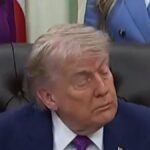
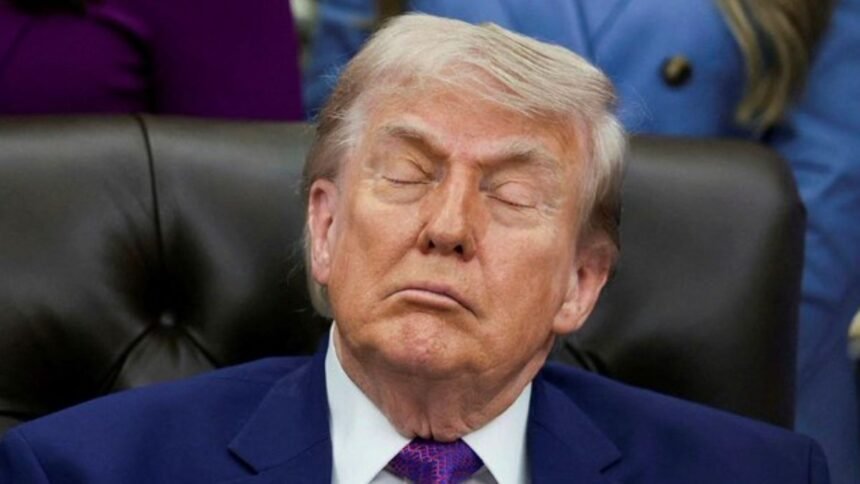
The incident started when Reuters national security correspondent Idrees Ali shared a photo of President Donald Trump sitting in the Oval Office with his eyes closed. The image was captured during a maternal health press conference held at the White House on May 11, 2026. Ali’s caption was completely neutral, simply noting the date, the location, and the name of the event.
U.S. President Donald Trump attends a maternal health event in the Oval Office at the White House in Washington, D.C., U.S., May 11, 2026. REUTERS/Evelyn Hockstein pic.twitter.com/MyB02AzxZS
— Idrees Ali (@idreesali114) May 11, 2026Ali did not write a single word suggesting the president was asleep. He made no accusation, offered no editorial comment, and attached no political framing to the image whatsoever. It was, by every reasonable measure, a standard news photo from a standard White House event.
That did not matter to the Trump administration’s rapid response team. Rapid Response 47, the official White House social media account created specifically to push back against media coverage, fired back at Ali as if he had launched a direct attack on the president. The reply was aggressive, dismissive, and almost instantly viral across every major platform.
“He was blinking, you absolute moron,” the account posted.
He was blinking, you absolute moron https://t.co/7gw3n7l8R3
— Rapid Response 47 (@RapidResponse47) May 11, 2026The response drew immediate backlash from political observers, journalists, and everyday readers who noted that Ali had never once claimed Trump was sleeping. Critics pointed out that the White House had, in effect, invented an accusation just to rage against it. For many, that kind of defensive overreaction raised far more questions than the original photo ever could have.
Democrats were not about to let the moment pass quietly. Within minutes of the Rapid Response 47 post, an account called Headquarters entered the conversation. The account originally launched as a Kamala Harris campaign account during the 2024 presidential race and was relaunched after the election as a Democratic rapid response outlet.
Headquarters posted a video showing Trump with his eyes closed for what appeared to be a noticeably extended stretch of time. The clip seemed to come from a different moment during the same press conference, as Trump’s head position was slightly different from the still image Ali had originally shared. Both the photo and the video told the same story, and together they made the White House’s “just blinking” explanation significantly harder to defend.
“That’s an awfully long blink!” Headquarters posted.
That's an awfully long blink! https://t.co/Mv0rRAn7CI pic.twitter.com/3aiZ6DLnYm
— Headquarters (@HQNewsNow) May 11, 2026The back-and-forth quickly spread well beyond political Twitter. News outlets picked it up, commentary flooded in from all sides, and the phrase “absolute moron” became shorthand for a White House communication style that many describe as more raging than reassuring. What should have been a forgettable moment at a routine maternal health event had now become a national conversation about the president’s alertness in office.
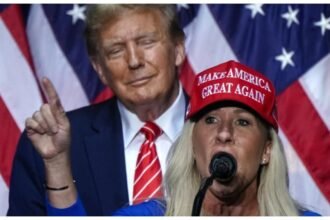
This is not the first time the pattern has surfaced. Trump has faced repeated public accusations of dozing off during official events, with videos and photos showing him sitting motionless with his eyes closed for several seconds at a stretch. Each time, the White House and the president himself have pushed back hard, insisting the images and clips are misleading. Trump has consistently maintained that he was simply blinking or resting his eyes, never sleeping.
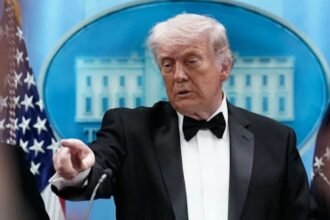
The most widely covered prior incident took place during a cabinet meeting in December, when multiple cameras appeared to catch the president with his eyes closed for an uncomfortably long period. When asked about it directly, Trump did not deny closing his eyes. Instead, he blamed the meeting itself, saying it had gotten “pretty boring” and that he had closed his eyes because he “wanted to get the hell out of there.”
In a striking moment of candor, Trump even acknowledged the length of these gatherings. The December cabinet meeting ran for two hours and 18 minutes, and a previous one in August had stretched to three hours and 17 minutes. Much of that time, according to reporting, was devoted to cabinet members offering lavish praise for the president and his achievements. At one point, Homeland Security Secretary Kristi Noem reportedly suggested that Trump had “kept the hurricanes away.”
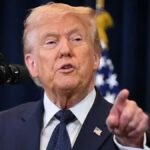
Trump has also addressed the broader question of his health and age. At 79, he is the oldest person ever to serve as president of the United States. In a Wall Street Journal interview, he pushed back firmly against any suggestion that his age or energy were cause for concern. “My health is perfect,” he said, adding that when cameras catch him with his eyes shut, it is simply a matter of blinking at the wrong moment.
The irony of Monday’s episode is impossible to miss. Rapid Response 47 was created to combat what the Trump administration calls “fake news.” Its stated purpose is to hold media outlets accountable for misleading or inaccurate coverage. But on Monday, the account attacked a journalist for sharing a real, unedited photo with a factual caption, and in doing so, turned a quiet news image into a raging, trending story seen by millions. The White House did not shut down a narrative. It launched one.
The pattern that viewers are now zeroing in on is not just about one closed-eye photo or one viral tweet. It is about how consistently these moments keep happening, how quickly the White House rages in response, and how that fury almost always makes the story bigger than it was before. Whether the president was blinking, resting, or something else entirely, one thing has become very clear: the defensive overreaction is no longer just a footnote. It is the story itself.