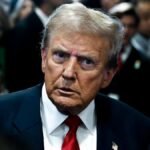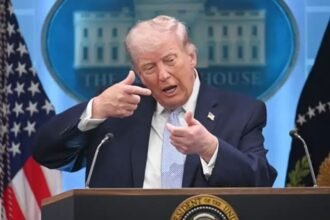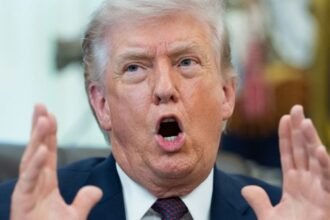

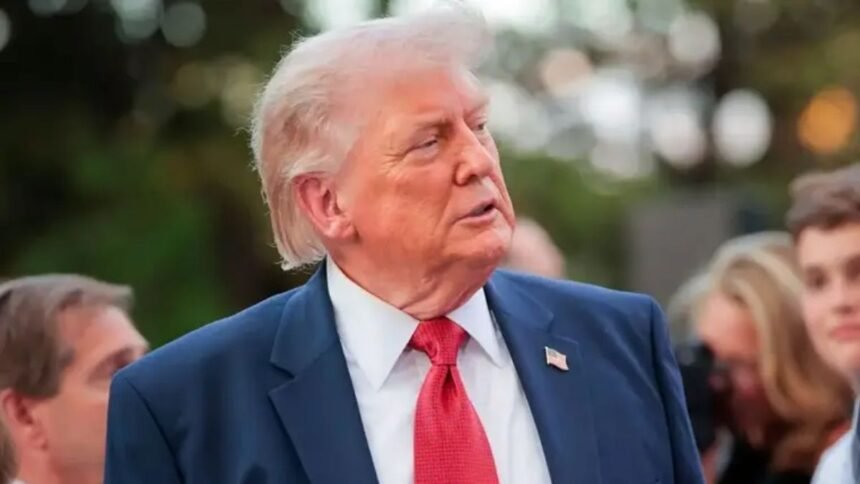
President Donald Trump proudly bragged about the shameless viral attention surrounding his White House stunt involving a DoorDash delivery near the South Lawn door. He seemed genuinely satisfied with the moment. He even seemed proud of the stolen spotlight it created for his political agenda.
The delivery driver was Sharon Simmons, a 58-year-old grandmother from Fayetteville, Arkansas, who arrived wearing a branded “DoorDash Grandma” shirt to hand Trump his favorite McDonald’s food. She was not some random driver off the street. Days later, Trump himself admitted the moment was “tacky” after viewers discovered Simmons had previously appeared at Republican-backed events promoting his No Tax on Tips agenda.
The April stunt was designed to look organic, but it never passed the smell test. Trump used the White House moment to push his tax plan, claiming the legislation saved Simmons an extra $11,000 in tips. Critics immediately called it a scripted political prop dressed up as a heartwarming encounter with a working American.
Your DMs are closed, but ours are open. We stand by our statement: we don't keep Dasher tips. If this order is real, we'd love to see the details — send us a message.
— DoorDash (@DoorDash) May 19, 2026As the criticism exploded online, DoorDash’s PR team made a costly and avoidable mistake. Instead of staying quiet and letting the news cycle move on, they jumped directly into social media comment sections and started arguing with users. That decision transformed a manageable embarrassment into a full-blown public relations nightmare.
The company’s head of public affairs tried to defend the stunt by telling critics, “No one is claiming it was a real delivery.” To most observers watching the exchange unfold, that statement only confirmed what critics had been saying from the beginning. The whole thing was carefully orchestrated, and the company had just admitted it out loud.
Now, barely weeks after that first meltdown, DoorDash finds itself drowning in another fresh wave of public outrage. This time, the controversy centers on a viral post about stolen tips directly hitting drivers’ wallets. And once again, Trump’s name is being pulled right into the middle of it.
A user on X, posting under the name Miss Lucid’s Diary, shared a firsthand account that spread rapidly across social media platforms. She wrote, “I heard doordash was stealing tips from their drivers so out of curiosity, I asked the woman who dropped off my tacos how much it’s showing that I tipped her; she said $5. I showed her my phone where I tipped $20 (bc the taco place was busy and she waited for my order).” The post struck a nerve because it was specific, relatable, and impossible to dismiss.
The original poster then asked DoorDash directly, “Why do you do this?” She received no response from the company. She followed up by directing her followers to a Reddit thread filled with nearly identical complaints from both delivery drivers and customers who felt cheated.
“There might be another class action lawsuit forming soon,” she wrote. “Doubters, you might also want to check this out bc they are def[initely] stealing tips.” The Reddit thread gave the claim real weight, showing the complaint was not an isolated incident but a widespread pattern that workers had been reporting for some time.
DoorDash responded with a tone that felt dismissive and combative at the same time. The company fired back publicly, “Your DMs are closed, but ours are open. We stand by our statements: we don’t keep Dasher tips. If this order is real, we’d love to see the details — send us a message.” The phrasing “if this order is real” landed badly, reading more like an accusation than a good-faith offer to investigate.
President Trump has McDonalds delivered via DoorDash to the Oval Office pic.twitter.com/etN7LDCHp9
— Daily Loud (@DailyLoud) April 13, 2026That response immediately backfired in a very public way. A community note was attached to DoorDash’s reply, directing readers to official press releases from the offices of New York Attorney General Letitia James and District of Columbia Attorney General Brian L. Schwalb. Both offices had taken formal legal action against DoorDash for exactly this kind of behavior in the past.
The community note stated plainly, “DoorDash settled multiple lawsuits, including $16.75M in NY and $2.5M in DC, for using customer tips to offset drivers’ base pay instead of paying them fully from 2017-2019.” The legal record showed that DoorDash had used customer tips to subsidize driver base pay, quietly boosting the company’s bottom line while drivers received less than customers believed they were sending. It was not a rumor or an allegation pulled from thin air. It was a documented, settled legal fact.
DoorDash pushed back again, insisting, “This is not true. Dashers always get 100% of their tips. We will DM for order details to see what actually happened.” Miss Lucid’s Diary refused to cooperate with the request. She replied, “Throwing the dasher under the bus just so you can lock my account the second I hand over my order details and keep the credits anyway.”
Other users quickly joined in. One person wrote, “Base + tips, you guys lower or remove base pay when someone tips well. You are absolutely stealing tips and trying to hide it here.” Another added sharply, “Yikes, your marketing and relations department might need to work a little overtime on this one. Terrible optics. Maybe pay the people who slave for your system to function?”
The conversation took a harder turn when Trump’s name entered the thread. Two separate users commented, “Trump getting his cut from doordash,” and “Doordash scammed that money to give to trump.” A third person asked pointedly, “Y’all still using DoorDash after that publicity stunt they pulled with Trump?”
That moment said everything. The White House delivery episode had damaged public trust in DoorDash so deeply that even an unrelated tip scandal was now being connected back to it in real time. The brand’s political entanglement with Trump had become a permanent liability, one that follows the company into every new controversy it stumbles into.
For gig economy workers and everyday consumers alike, the pattern is impossible to ignore. DoorDash has a documented legal history of mishandling driver tips, a PR team that consistently makes bad situations measurably worse, and a high-profile political association that keeps reigniting old fires. Each new controversy pulls the last one back into the spotlight.
Whether DoorDash can separate itself from Trump’s South Lawn photo op, or escape the growing anger over its tip payment practices, remains genuinely unclear. What is clear is that the company is not fighting one public relations disaster right now. It is fighting several simultaneously, and its own responses keep making the damage worse with every reply it sends.