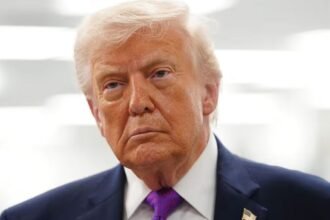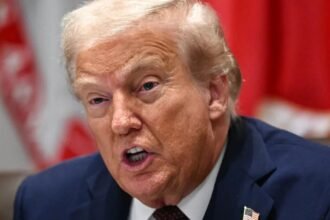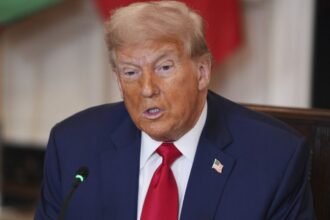

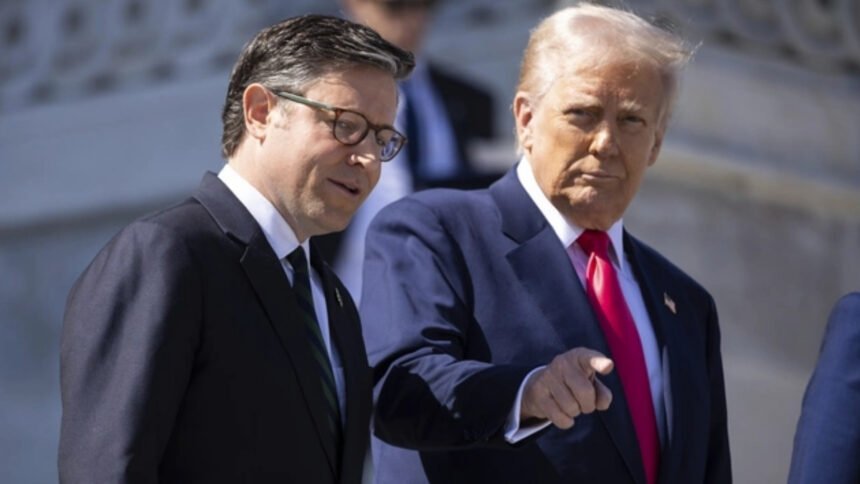
A rare fracture is forming inside the Republican Party. Senate Republicans — who largely stood behind President Trump when he ordered the opening strikes on Iran last weekend — are now breaking ranks and warning him openly — do not expand this war.
With the American death toll climbing to six and the conflict showing no clear end in sight, even Trump’s closest allies on Capitol Hill are starting to ask the questions his administration has so far refused to answer cleanly.
The breaks in Republican unity are not dramatic yet. But in a party that has spent years defining loyalty to Trump as its core identity, any public warning from within the ranks carries weight. And right now, multiple GOP senators are delivering exactly that.
The Questions No One Is Answering
The central problem for Senate Republicans is not whether the Iran strikes were justified — most backed that decision without hesitation. The problem is what comes next. Lawmakers leaving Monday briefings with Secretary of State Marco Rubio and other senior administration officials said they still do not have clear answers on the mission’s timeline, its specific objectives, or whether American troops will ultimately be sent into Iran on the ground.
That last question became urgent after Trump himself refused to rule it out. Speaking to The New York Post following the strikes that killed Iranian Supreme Leader Ali Khamenei and several of his likely successors, Trump said bluntly: “I don’t have the yips with respect to boots on the ground — like every president says, ‘There will be no boots on the ground.’ I don’t say it.”
For senators already nervous about the direction of the conflict, those words landed hard.
Sen. Shelley Moore Capito (R-W.Va.), a member of Republican leadership, said she believes Trump understands the public’s anxiety about a drawn-out military engagement. But she did not hide what that anxiety looks like in practice. “What I read is — be prepared for longer than what you think, it’s not a one-and-done situation,” she said. “Anytime you have American lives that are lost or casualties, it becomes very tough and it’s almost deja vu to what we went through in the early 2000s.”
That comparison to Iraq is not accidental. It is the most powerful political warning a Republican senator can deliver to a Republican president right now.
A Promise That Is Getting Harder to Keep
For years, MAGA voters and conservative supporters rallied behind Trump’s central foreign policy promise: no more forever wars. No more sending American sons and daughters into the desert for a conflict with no exit. That promise was not a small footnote in Trump’s political identity — it was one of the loudest applause lines at every rally, a direct rebuke of the Bush-era Republican establishment that had dragged the country into Iraq and Afghanistan.
Now, Trump is running a military operation in Iran with no defined end date, a rising American death toll, and an open-door policy on ground troops. On Monday at the White House he said plainly: “Whatever it takes.”
Sen. Chuck Grassley (R-Iowa) captured the anxiety in four words when he told reporters the single question he wants answered in Tuesday’s full Senate briefing: “What’s the end game?”
Sen. James Lankford (R-Okla.), another member of Republican leadership, said the message from his Oklahoma constituents has been consistent and clear. “People don’t want a protracted war,” he said. “But they’re also very concerned about Iran and the threats down there.”
The War Powers Vote
The Senate is expected to vote as early as Tuesday evening on a war powers resolution backed by Sen. Tim Kaine (D-Va.) and Sen. Rand Paul (R-Ky.) — an unusual bipartisan pairing that reflects just how broadly the concerns about this conflict stretch across party lines. The resolution is not expected to pass. Sen. Josh Hawley (R-Mo.) confirmed he will vote with the GOP to block it, though he added that congressional authorization would be required if ground troops are eventually deployed.
Still, the fact that the vote is happening at all is meaningful. Congress is signaling that it intends to stay in this conversation, whether the White House wants it there or not.
How Far Will Trump Go?
Not every Republican senator is sounding the alarm at the same volume. Sen. John Kennedy (R-La.) said he is not worried about ground troops and believes the mission can succeed through air support alone. “I think we’ll be able to accomplish all or most of everything we’re trying to accomplish without putting boots on the ground,” Kennedy said. He then offered a colorful defense of Trump’s approach: “President Trump believes in being a bear, and he believes if you’re going to be a bear, you ought to be a grizzly.”
But even Kennedy’s confidence exists inside a larger cloud of uncertainty. The administration has still not clearly defined what “mission accomplished” looks like in Iran following the deaths of Khamenei and many of those considered his most likely successors. With no obvious successor in power, no exit strategy on the table, and American casualties already at six, the deadly Iran war that Senate Republicans backed last weekend is rapidly becoming a war they are no longer sure they can fully defend.
The breaks in the ranks are small today. The question is whether Trump’s next move makes them impossible to ignore.