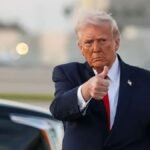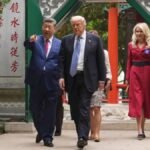

President Donald Trump arrived visibly confident for his diplomatic summit with Chinese President Xi Jinping. The trip was designed to project strength, progress, and steady leadership between the two most powerful nations on earth. Instead, the moment viewers remember most has nothing to do with diplomacy. It has everything to do with a chair.
The viral moment unfolded Friday, May 15, as Trump sat for high-stakes talks with Chinese President Xi Jinping amid serious ongoing tensions over Taiwan, trade negotiations, and the growing crisis surrounding Iran. The two leaders met at Zhongnanhai Garden, which, according to The New York Times, is China’s restricted political headquarters in Beijing. It was a setting meant to signal gravity and importance. What social media took from it was something else entirely.
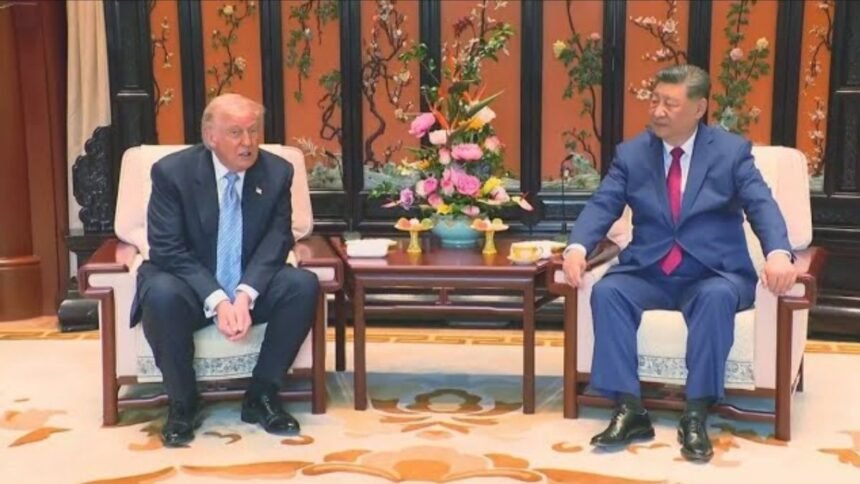
The reception room itself was elaborate and carefully designed. It was decorated in peach, cream, and brown tones, with plum blossom panels lining the walls. Four dark lacquered chairs were arranged around a trapezoid-shaped table. The two center seats belonged to Xi and Trump.
On paper, the arrangement appeared completely equal.
Online, however, it was a different story. Eagle-eyed viewers quickly claimed that Trump’s seat cushion looked noticeably thinner than Xi’s. That small difference, they argued, caused Trump to sit slightly lower throughout the entire meeting. Combined with Trump’s well-known posture — shoulders rolled forward, legs spread wide, torso tilted — the visual contrast between the two leaders became impossible to ignore.
Xi sat upright, calm, and completely composed.
Trump looks so tiny here compared to Xi. They gave him a shorter chair! 🤣🤣🤣 pic.twitter.com/K0Fq1ZI24c
— USNewsFeed (@USNewsFeed_) May 16, 2026“Trump looks so tiny here compared to Xi. They gave him a shorter chair!” one person wrote after zooming in on the footage. Another added, “Purposefully done to make him look a lesser leader than Xi. Delicious.” The reaction spread fast, and within hours the chair had become the defining image of the entire summit.
Others pushed the narrative even further. One person shared a side-by-side photo of Xi seated next to Barack Obama, arguing that the 44th president never received what they called a “toddler’s chair.” The implication was clear: this setup was personal, and it was deliberate. Some viewers found humor in the idea that Trump’s own posture had made things worse for him.
“And 47 always sits like he’s on the toilet. ALWAYS!” one user joked.
The conspiracy theory only intensified when a second clip began circulating online. The footage allegedly showed a staffer removing or adjusting a cushion from Trump’s chair just before a later state dinner event. After the cushion disappeared, Trump appeared seated even lower than Xi during the formal meal.
Here is the video of the booster pillow removal pic.twitter.com/WsCuHpyiWu
— USNewsFeed (@USNewsFeed_) May 16, 2026“Okay. This is funny,” one viewer mocked. “He said no to the booster chair on camera and look how low he is now. Now we know something new. Thanks China.” Another person simply declared, “China is the top-level troll master.” The clip spread across every major platform within minutes.
Not everyone bought into the theory, though. Some skeptics pushed back and argued the chair drama had far less to do with geopolitics and far more to do with basic physics. Their counter-argument was simple and blunt.
“It’s literally the same chair,” one critic wrote. “He just sank because he weighs 300 pounds.”
Still, the debate over the chair ended up overshadowing nearly every other moment from the Beijing summit. That included a far more serious, and far more uncomfortable, exchange with reporters that unfolded right beside Xi. The press moment was brief, but it left a lasting impression.
During the press interaction, reporters repeatedly shouted questions asking whether the two leaders had discussed Taiwan, one of the most explosive flashpoints in the entire U.S.-China relationship. According to reports, Xi had warned Trump directly during the summit that interference on Taiwan could lead to “clashes and even conflicts” between the two nations. It was a serious, direct warning from one superpower to another.
When reporters first asked how the talks went, Trump responded with just one word. “Great,” he said. But when journalists pressed him specifically about Taiwan, his tone shifted fast.
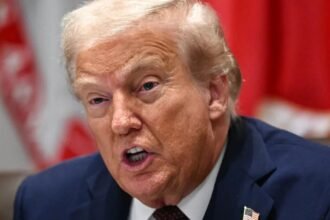
Trump appeared visibly irritated and refused to engage with the question directly. Instead, he pivoted awkwardly into praising China itself, all while Xi stood calmly nearby with a steady smile on his face.
“Great place. Incredible. China’s beautiful,” Trump blurted out.
As reporters kept pushing him on Taiwan, Trump’s expression hardened visibly. He stared ahead in silence for several long seconds before abruptly ending the exchange with, “Thank you very much,” and walking away quickly. The uncomfortable exit triggered its own separate wave of online commentary, with many critics arguing Trump looked rattled and outmatched.
For many viewers watching from home, the full picture came together on its own. The shorter chair, the slumped posture, the removed booster pillow, the awkward press exit, and Xi holding court the entire trip with quiet authority all pointed in the same direction. Xi never raised his voice. He never had to.
And in the social media era, where every glance, every shrug, and every seat cushion becomes part of the political theater, many viewers now believe Xi did not just outmaneuver Trump diplomatically. He made him look foolish doing it, and the whole world was watching.